 Snakes&Roses
Journal · Medicine
What is the difference between ayahuasca and yagé?
Same vine, different names, and some real differences in how the medicine is prepared and held.
By Min · 6 min read
If you've been reading about plant medicine, you've seen both words: ayahuasca and yagé. Sometimes they're used as if they mean the same thing. Sometimes as if they're two different medicines.
The short answer is that they come from the same plant. The longer answer says a lot about where the medicine comes from and how it's held.
One vine, many names
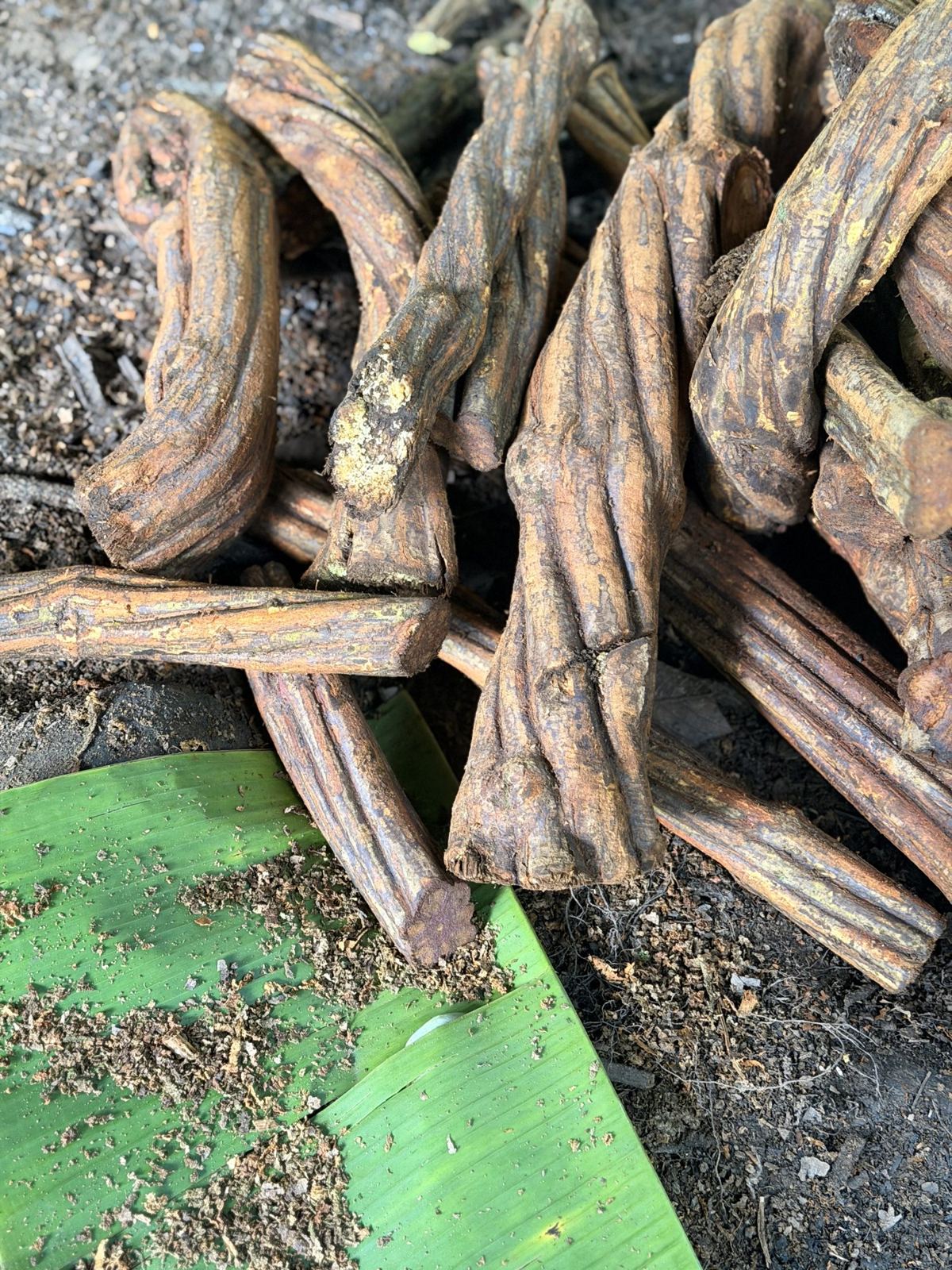
At the heart of the brew is a woody jungle vine, Banisteriopsis caapi. It grows across the Amazon basin, from Peru and Ecuador to Brazil and Colombia, and indigenous peoples have worked with it for centuries.
Each people has its own name for it. Ayahuasca comes from Quechua, the language of the Andes, and is usually translated as "vine of the soul" or "vine of the spirits." It's the word used in Peru and Ecuador, and the one most of the world has learned.
Yagé (also written yajé) is the name used by the peoples of the Colombian Amazon and its foothills, such as the Kamëntšá, Inga, Siona and Cofán. In Putumayo, the medicine is commonly called yagé, and the healers who work with it are known as taitas. “Ayahuasca” is the better-known term internationally, but names and practices vary across communities and regions.
The other plants in the pot
The vine is almost never prepared alone. It's cooked or mixed with the leaves of other plants, and this is where regional traditions begin to differ.
In much of Peru the vine is combined with chacruna (Psychotria viridis). In Colombia, many taitas use chagropanga (Diplopterys cabrerana), whose leaves are said to give the medicine a different character. Every family has its own recipes, and some keep them close. I'm still learning which is which.
Different ways of preparing
How long the medicine is cooked, how much water is used, whether it's reduced to a thick brew or kept fresh: all of it changes the experience. Taita Miguel Mavisoy and Taita Leonardo Jacanamejoy work with yagé crudo, prepared using freshly harvested vine. The preparation takes time and care, and the exact methods belong to the knowledge and practice of the families who make it.
Different ways of holding ceremony
The biggest difference is often not the brew but the ceremony around it. Ceremonies vary not just between countries but between communities, families, and individual healers. In the settings where Min works in Putumayo, music is an important part of the night: singing and instruments may accompany the ceremony around the fire. Other traditions have their own practices. One isn't inherently better than another.
Neither is better. They're different expressions of the same old relationship between people and a plant.
So which word is right?
Both. If you search online, you'll find more under "ayahuasca." This site uses both terms so visitors can find the information they're looking for, while using yagé when speaking specifically about the medicine and traditions of Putumayo.
Frequently asked
Is yagé stronger than ayahuasca?
It depends on the preparation and the plants used, not on the name. Every taita's medicine is a little different.
Is yagé the same plant as ayahuasca?
Yes. Both names refer to the vine Banisteriopsis caapi and to the brew made from it.