 Snakes&Roses
Journal · Medicine
Where does the word “shaman” come from?
It's a word from Siberia. Here in Putumayo, the healers who work with yagé are called taitas.
By Min · 4 min read
“Shaman” is one of those words you see everywhere now… on retreat websites, in books, all over Instagram. You'll find it on this website too.
But where does it actually come from? And is it what the healers here call themselves?
The short answer: it's a word from Siberia, and no. 🌿
A word from Siberia
“Shaman” comes from the Evenki, a Tungusic people of Siberia, from their word šamán (also written samān). For them it named a particular kind of spiritual specialist, within their own culture and their own way of seeing the world.
The word entered Russian in the 1600s, as Russia moved into Siberia. One of the first people to write it down was Avvakum, an Orthodox priest who had been exiled there. A few decades later, a Dutch traveller named Nicolaes Witsen carried it to Western Europe in a 1692 book about his journeys through Siberia.
Some people link the word to an Evenki root meaning “to know,” though not everyone agrees on that.
How it travelled the world
From there, the word took on a life of its own. Europeans began using “shaman” for healers and spiritual practitioners all over the world, including in the Americas, among peoples who had never heard the word and already had their own names for what they do.
So a word that belonged to one people in Siberia slowly became a catch-all for very different traditions, on different continents, with different histories.
Not a word the healers here use
The healers of Latin America don't associate themselves with this word. It came from outside, and it was never theirs.
In Putumayo, they're called taitas
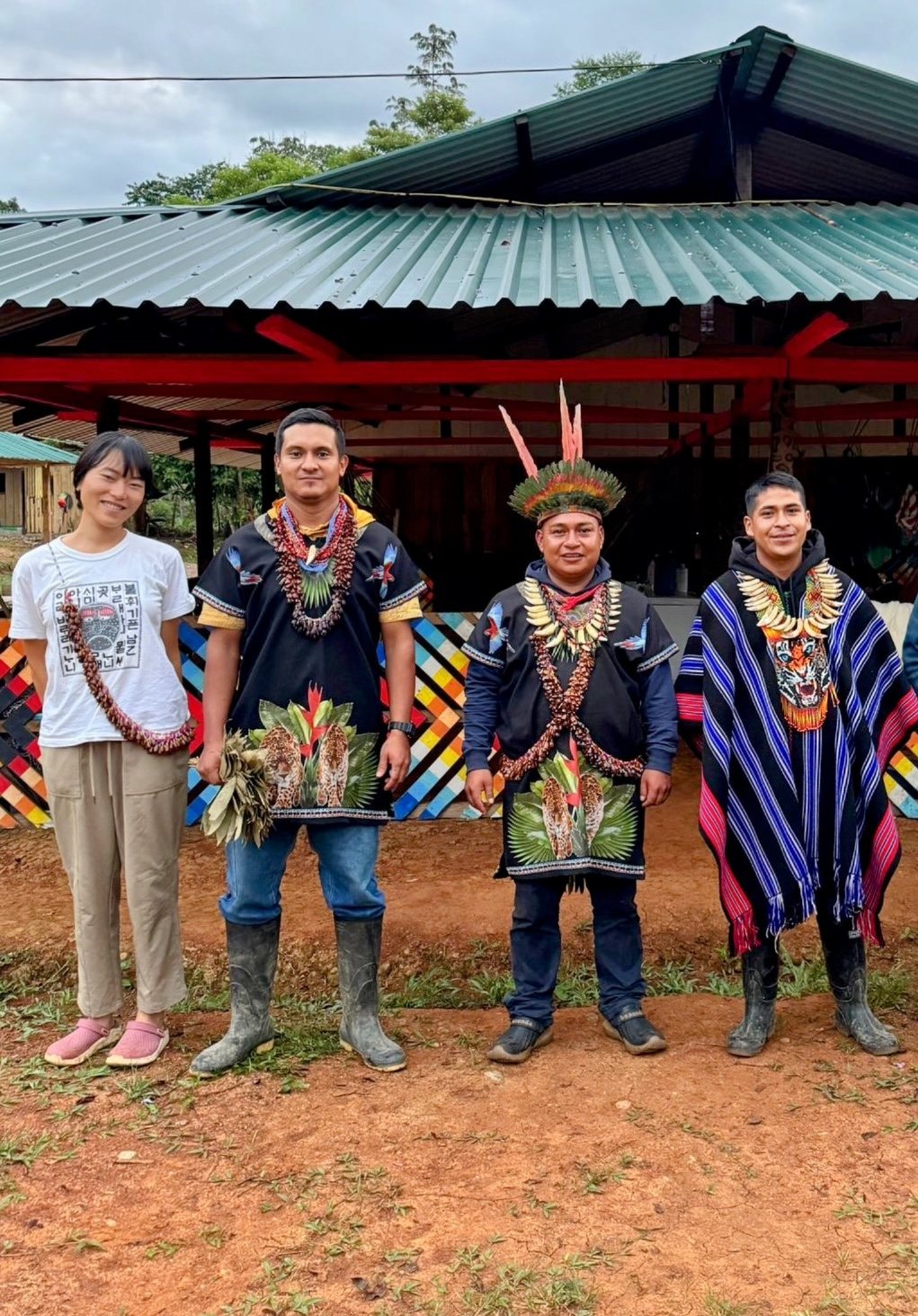
Here in Putumayo, where I live, the healers who work with yagé are called taitas. Taita means “father.”
It's a title of respect, not one you give yourself. It's earned over many years of learning the plants, dieting and sitting in ceremony, and through recognition by the elders and the community. That's how I've come to know Taita Miguel Mavisoy and Taita Leonardo Jacanamejoy, the two Kamëntšá healers I learn from.
So why does this site still say “shaman”?
Because it's the word most people recognize instinctively. If you've never heard of a taita, “shaman” is probably how you'd look for one. So I use it here to help people find their way, and I say taita when I'm talking about the healers and traditions here in Putumayo.